Why Do People Enjoy Being Fooled Sometimes... And Hate It Other Times?
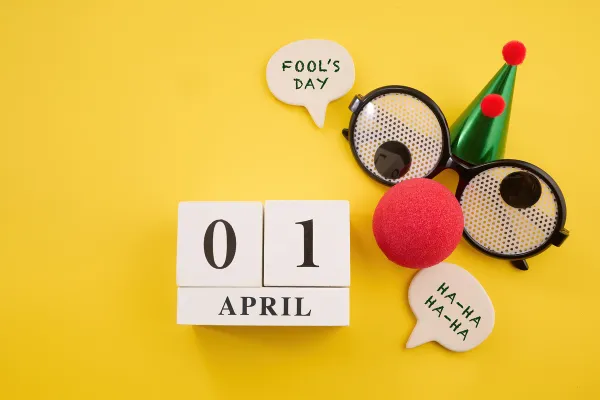
April Fool's Day can be a funny little mirror. The exact same “trick” can feel like delightful silliness to one person and like a punch of embarrassment to another.
So if you’ve ever wondered why, this Question Quest is for you:
❓Why Do People Enjoy Being Fooled Sometimes… And Hate It Other Times?
At the centre of it is a simple idea: our brains are super-fast guessing machines that love to predict what comes next: what we are about to see, what someone is about to say, what something “must” mean etc.
Most of the time, those predictions help us move through the world efficiently. But when something unexpected happens, the brain does a quick internal double-take: “Wait, WHAT?” If that surprise happens inside safety, trust, and consent, we often laugh. If it happens inside threat, shame, or feeling trapped, we often don’t.
Surprise + safety = fun.
Surprise + threat = not fun.
Here’s the MAP to help you explore it, the Knowmads way…
🛠️ M – MAKE & TRY
These are designed to be kind, reversible, and never humiliating. Each one explores the same idea: surprise is only fun when it sits inside trust.
1) The Kind Prank Design Challenge
What it’s good for: Helping kids practise consent and boundaries, perspective-taking, and noticing whether a joke is landing well. It’s also a gentle intro to the kind of thinking scientists and designers use: plan, test, notice what happened, and improve.
How to do it with your Knowmads:
Start with consent. Ask them:“Do you feel like a silly surprise today?”
If the answer is no, thank them and choose a different activity. (This is the lesson too!)
If the answer is yes, invite them to design a prank like an inventor:
On paper, write what the other person will expect.
Write what will actually happen.
Encourage them to name what “fun” will look like on the other person’s face and in their body.
Ask: “How can we undo it in under 10 seconds?” (Reversible = safer.)
Run the prank.
Debrief like scientists. You can ask:
“What did you think was happening at first?”
“When did you realise?”
“What did your body feel like?”
“Did it feel fun for everyone?”
Low-stakes, reversible ideas:
Googly eyes on the milk carton.
A silly “official notice” on the bathroom mirror (example: “Today: penguin walking only”).
Switch two labels on jars (pasta and rice) and see who notices.
Lab rule: If anyone says “stop”, it stops.
2) Illusion Mini-Studio
What it’s good for: Practising careful observation, flexible thinking (holding more than one possible answer), and explaining what you notice. It’s a playful way to see that our brains interpret what we see, and that it’s normal to change your mind.
How to do it with your Knowmads:
Pick one illusion to explore together:
Necker cube: https://en.wikipedia.org/wiki/Necker_cube
Duck–rabbit illusion:https://en.wikipedia.org/wiki/Rabbit–duck_illusion
Invite everyone to look silently for 20 seconds.
Then ask:
“What did you notice first?”
“What changed after you learned the trick?”
“Was it your eyes that changed, or your brain’s interpretation?”
Extra challenge: encourage your Knowmads to draw a simple illusion, or create a forced-perspective photo (one person looks tiny, one looks giant).
3) The Prediction Game
What it’s good for: Building storytelling, listening and inference skills (making a best-guess from clues), practising the emotional side of being wrong, being surprised, and changing our minds.
How to do it with your Knowmads:
One person tells a story and pauses right before the ending.
Everyone guesses what happens next.
Reveal the real ending.
Do a quick feelings check. Invite your Knowmads to answer:
“What did it feel like to be right?”
“What did it feel like to be wrong?”
“Was the surprise good, bad, or mixed?”
Tiny upgrade: After each guess, ask: “What clue did your brain use?” This helps kids notice assumptions.
❔ A – ASK & FIND OUT
These aren’t ‘quiz questions’. Pick any you like, then investigate together using books, videos, museum visits, family stories, discussions etc. (The ‘Look into’ notes are just ideas for what to search for.)
What makes a surprise feel safe?
Look into: examples of consent, tone of voice, shared expectations, and how people signal “I’m playing.” Compare a fun surprise versus a stressful one.
Try this: ask your Knowmads to describe a “safe surprise” and an “unsafe surprise” without naming names.
What is the difference between laughing with someone and laughing at someone?
Look into: dignity, power, and audience. Notice who has choice, and who is the “target.” Talk about what repair looks like when a joke lands badly.
Try this: invite your Knowmads to finish the sentence: “Laughing with feels like… / laughing at feels like…”
Why do we sometimes laugh right after we feel scared?
Look into: the idea of tension and release, nervous laughter, and how the body discharges adrenaline once it realises it is safe.
Try this: explain that laughter can be a body “reset button” — it doesn’t always mean something was funny.
How do magicians use attention and misdirection?
Look into: “spotlight” attention, how distraction works, and why our brains miss things that are right in front of us.
Try this: encourage your Knowmads to notice where their eyes go first in a short magic clip.
What’s the difference between a lie, a magic trick, an illusion, and a prank?
Look into: intent (to delight, to deceive, to harm, to protect?), consent (are you “in on it”?), and what happens after (is the truth revealed? is there repair?). It can also be interesting to compare: stage magic (the audience agrees to be fooled) vs scams (the person does not), or a surprise that ends with a reveal vs one that leaves someone feeling confused.
Try this: invite your Knowmads to make a simple “decision guide” together: What makes something playful and safe? What makes it unfair or harmful?
How do optical illusions fool our eyes?
Look into: how the brain fills in gaps, chooses patterns, and makes the “best guess” from limited information.
Try this: ask, “What did your brain assume?”
What is confirmation bias, and how does it fool us online?
Look into: why we click things that match what we already think, how algorithms feed that, and what “pause before sharing” can look like.
Try this: invite your Knowmads to practise a rule: “Pause, then check.”
What makes a prank feel like bullying?
Look into: consent, repetition, humiliation, and social pressure. Ask: “If the person cannot easily say no, is it really a joke?”
Try this: encourage your Knowmads to name the difference between “everyone laughing” and “someone stuck.”
🧭 Explore more:
📺 Watch:
Inattentional Blindness – A famous attention test that shows how easy it is to miss something obvious when your brain is focused on a task.
The science of optical illusions (SciShow Kids) – A kid-friendly explanation of how eyes send information and how brains turn it into what we think we see.
The science of illusion (David Kwong, TED Institute) – A quick look at misdirection and attention and why stage magic works when we don’t know where to look.
📚 Read:
The Book With No Pictures (B. J. Novak) - A joyful reminder that “being fooled” can be completely safe and hilarious when everyone is in on the game.
Optical Illusions Activity Book – A hands-on book of optical illusion activities - great for mixed ages and perfect for pairing with the illusion mini-studio activity.
Fake News And How To Spot It (Usborne Life Skills) – A kid-friendly guide to spotting scams, persuasion tricks, and misinformation online.
🗺️ Visit:
A science museum with perception exhibits - Look out for hands-on stations about vision, sound, mirrors, or “your brain vs reality” puzzles.
A children’s museum with interactive illusion rooms - These are great for mixed ages because everyone can try the same exhibit and notice different things.
A friendly, family-oriented magic show (bonus points if it invites volunteers respectfully). - A lovely way to talk about consent, trust, and the difference between playful deception and harmful deception.
💭 P – PAUSE & REFLECT
Surprises aren’t only “in our heads.” They show up in our bodies: a jolt, a rush, a tightness, a giggle. Pausing helps kids learn to name what happened, notice what they needed, and practise repair.
Invite Your Knowmads them to finish the following sentences:
“A time I was fooled and laughed was…”
“A time I was fooled and didn’t like it was…”
“What was different?”
Why this matters: It helps the brain learn the difference between safe surprises and unsafe ones, so kids can ask for what they need next time.
Ask Your Knowmads: “What helps you feel safe when something surprises you?”
If helpful, you can offer options like: a warning, a choice, a signal word like “pause” or “stop”, knowing you can leave, knowing you will not be laughed at etc.
Why this matters: When kids can name their safety tools, they can use them.
The tiny ‘April Fools’ reset
April Fools works because our brains love to make quick guesses.
They fill in gaps, jump to conclusions, and decide what’s happening before we’ve really checked.
And honestly? We do this to ourselves all the time.
A thought pops up like “I’m failing, I’m behind, everyone else is coping better than me”, and it can feel like a fact.
But it’s often just your brain doing what brains do: telling a story fast.
So here’s a tiny “April Fools” self-care practice for this week:
When you notice a stressful thought, gently say: “Is this a fact… or is this my brain guessing?”
Then try adding one kinder, truer sentence: “What else might be true?”
Remember, you don’t have to believe every thought you think.
Sometimes the most powerful reset is catching the story, and simply choosing a softer one…
Big hugs,
Anna xx