Who Decides What Women and Men Are “Supposed” to Be Like?
Next Sunday is International Women’s Day. You might notice flowers in shop windows, special events, and stories celebrating women and girls around the world, but it’s also a great opportunity for a question quest that reaches far beyond a single day:
❓Who decides what women and men are ”supposed” to be like?
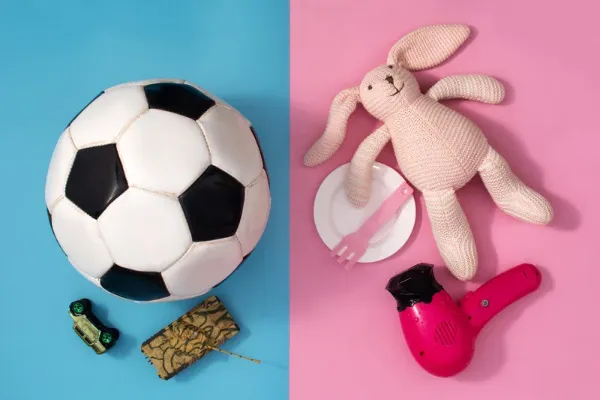
From the moment children are born, the world starts sending messages: what toys they’re given, what colours they wear, how they’re expected to behave or what they’re encouraged to dream about. But have these roles always been the same?
In the Stone Age, survival depended on everyone contributing: some people hunted, some gathered, some cared for children, some made tools. And interestingly, modern discoveries show these roles were often more flexible than we once thought! Then over time, societies created stricter rules and expectations for genders, with some opening doors, and others closing them.
Yet history is full of people who quietly (or boldly) stepped beyond those expectations.
Women who became scientists, explorers, leaders, and creators. Men who became caregivers, artists, and healers. People who chose curiosity over convention.
So this week, let’s explore where gender roles come from, the Knowmad’s way...
🛠️ M – MAKE & TRY: The “Role Labels” Poster
You’ll need: paper (or a big bit of cardboard), pens, and a handful of sticky notes or stickers.
Draw two simple outlines on the page: one labelled “Girls/Women” and one labelled “Boys/Men.”
On sticky notes, write labels and roles you’ve heard people use (from school, family, adverts, books, films), like: brave, pretty, strong, weak, bossy, careful, kind, emotional, leader, helpful, sporty, shy, clever, dancer, engineer, driver, teacher etc.
Ask your young Knowmads to put the sticky notes where they think people usuallyexpectthem to go.
Now do the best bit: move the notes around and discuss: which labels could go on both outlines? Which labels feel unfair or limiting? Which labels would you like to throw in the bin?
💬 A – ASK & FIND OUT: How Do Roles Shape Our Lives?
Encourage your young Knowmads to go deeper and explore questions like:
Were jobs always divided the same way between men and women?
How did survival shape people’s roles in early human groups?
How do different cultures and religions see gender roles today?
What happens when someone chooses a path others don’t expect?
Are there things boys/men feel they “shouldn’t” do? Or things girls/women feel they “can’t” do? Why?
How do role models help expand what feels possible?
These conversations help children see that many “rules” are really stories, and stories can change.
🧭 Explore More:
📺 Watch: “What is International Women’s Day?” by Clickview- A short video exploring the origins of women’s suffrage, damaging stereotypes for both girls and boys, and the presence of gender inequality that still exists today
📚 Read: “Fantastically Great Women Who Changed the World” by Kate Pankhurst- An engaging and inspiring book introducing children to women who broke barriers and followed their curiosity.
🌍 Visit: A Science or Maritime Museum - Discover stories of scientists, explorers and leaders, including women who challenged expectations and changed history.
💛 P – PAUSE: The Permission You Give
Children learn as much, or more, from what we do as from what we say.
They notice what we believe is possible.
What we attempt.
What we avoid.
What we apologise for.
What we claim as our space.
Every time you try something new, speak your truth, or follow your curiosity, you quietly give them permission to do the same.
Not by teaching, but by living.
You don’t have to be perfect.
Just by being fully, honestly yourself, you show them that there isn’t only one way to be.
Big hugs,
Anna xx